Preserved moss art: adding soft natural texture indoors
What preserved moss art brings to a room
Indoor plants have long been the go-to for bringing life into a space, but they come with upkeep: watering, pruning, worrying about light levels. Preserved moss art offers a different approach. It keeps the visual softness and organic feel of living moss without the maintenance. The moss is treated to stay green and supple for years, so it never needs watering or sunlight once it is mounted. That makes it a practical choice for rooms where live plants struggle, a dim hallway, a north-facing office, a bathroom with no window.
The appeal goes beyond convenience. Moss has a unique texture that nothing else quite mimics. It is neither flat nor shiny; it absorbs light rather than reflecting it, which gives a wall a quiet, grounded presence. Sheet moss, cushion moss, and reindeer moss each offer a different surface quality, from velvety mats to tufted, almost coral-like clusters. Arranging them in a frame turns that texture into a deliberate design element rather than an afterthought.
How preserved moss is made and why it works
Preserved moss starts as live moss. The preservation process replaces the natural moisture with a plant-based glycerin solution, which keeps the cells flexible and the colour stable. The moss is then dyed to restore or enhance its green tones. Some varieties, especially reindeer moss, are also dyed in muted pastels or earthy reds and oranges. The result is a material that looks and feels alive but will not decay, shed, or attract insects.
Because the moss no longer needs water or soil, it can be mounted on almost any surface. Common backings include wood, MDF, or acrylic panels. A layer of adhesive holds the moss in place, and the whole piece is set into a frame that protects the edges and keeps the moss from being touched. Once assembled, a finished preserved moss artwork is essentially zero-maintenance. It will not fade dramatically if placed in indirect light, though direct sun over months can dull some colours. Occasional dusting with a soft brush or a gentle puff of compressed air is enough to keep it looking fresh.
Choosing a style that fits your space
Moss wall art is not one-size-fits-all. The same material can produce very different effects depending on how it is arranged. A few common approaches give a sense of the range.
Minimalist panels
A single species of moss, such as sheet moss or cushion moss, mounted in a shallow frame with clean lines. The texture is uniform, the colour is deep green, and the overall look is restrained. This works well in modern interiors where the goal is to add natural warmth without clutter. A single large panel can act as a focal point above a sofa or console table.
Mixed-texture compositions
Combining two or three types of moss in one frame creates visual depth. For instance, a base of flat sheet moss with patches of reindeer moss adds a bumpy, almost lichen-like contrast. The variation in colour and surface keeps the eye moving. This style suits eclectic or bohemian rooms where layered textures are already part of the scheme.
Geometric or organic shapes
Rather than filling the entire frame with moss, some designs leave negative space. Moss is arranged in a circle, a hexagon, or a freeform organic shape against a neutral background. The exposed backing, often wood or pale fabric, frames the moss and makes it feel more like a deliberate composition. This approach can soften a room that has a lot of straight lines and hard surfaces.
Moss with other preserved botanicals
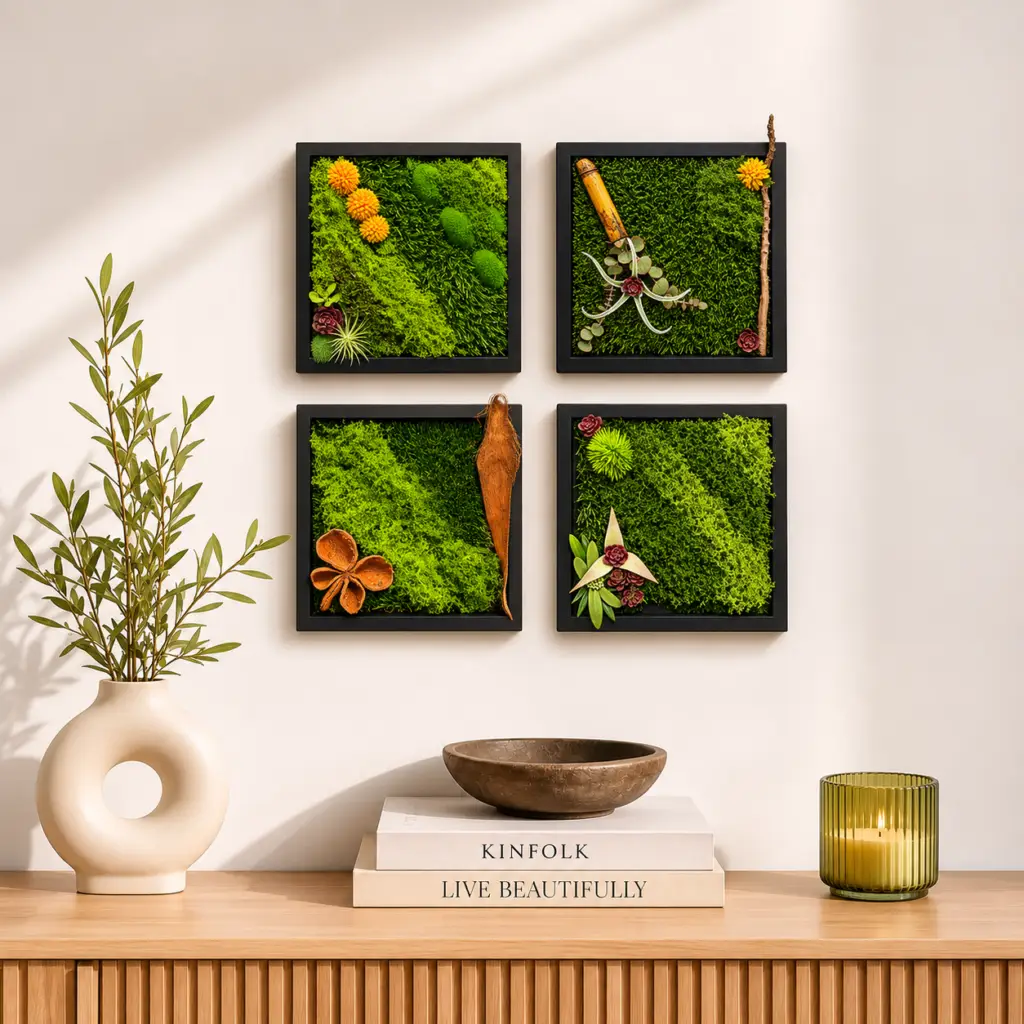
Some pieces incorporate dried ferns, grasses, or small branches alongside the moss. The contrast between the soft moss and the crisp lines of stems or leaves adds another layer of interest. These mixed botanical arrangements often work well in larger frames where the proportions allow each element to breathe.
Where to place moss wall art
Because preserved moss does not need light, placement is flexible. A few spots tend to work especially well.
- Entryways and hallways: these areas often lack natural light and feel cold with bare walls. Moss adds warmth and a natural element without the worry of a dying plant.
- Home offices: a small moss panel behind a desk can reduce visual noise and provide a calming backdrop for video calls. The texture absorbs some sound, though it is not a serious acoustic treatment.
- Bathrooms: humidity does not harm preserved moss, and the organic feel contrasts nicely with tile and chrome. Avoid placing it where water splashes directly.
- Living rooms: a larger piece can serve as an alternative to a painting or a mirror. Because moss is matte and non-reflective, it does not compete with other surfaces in the room.
One thing to keep in mind is that preserved moss is not suitable for outdoor use. Rain, direct sun, and temperature swings will degrade the preservation treatment quickly. It is strictly an interior display material.
What to look for in a finished piece
Quality varies among commercially available moss art. A well-made piece will have even coverage, no visible glue, and a secure frame. The moss should feel pliable, not brittle. If the moss crumbles when touched, it has dried out too much and will not hold up well. A finished preserved moss artwork should also be sealed at the back so that dust and debris cannot settle into the moss from behind. Many makers use a backing board with a dust seal or a layer of felt.
Colour consistency is another point to check. Reindeer moss in particular is often dyed, and some batches have uneven colour distribution. That is not necessarily a flaw, natural variation can look intentional, but if the colour looks blotchy in a way that distracts from the design, it may be a sign of rushed production. Good pieces use quality dyes that do not rub off on fingers or nearby walls.
Maintenance and longevity
One of the main reasons people choose preserved moss art is the low upkeep, but it is not zero. Over time, dust will settle on the surface. A quick pass with a soft brush or a microfiber cloth every few months keeps the colours vibrant. Avoid using water or any cleaning spray; moisture can reactivate the glycerin and cause the moss to become sticky or discoloured.
Direct sunlight is the biggest threat to longevity. UV rays will gradually fade the dye, especially in reindeer moss. If the piece is in a room with strong sun, consider placing it on a wall that does not get direct light, or use UV-filtering glass in the frame. In indirect light, the colours stay stable for several years.
Humidity is generally not a problem. Preserved moss tolerates normal indoor humidity swings well. In very dry climates, the moss may become slightly brittle over time, but that is rare. If the air is extremely dry, a light misting with distilled water once a year can help keep it supple, though most pieces never need it.
Why texture matters in interior design
Rooms that rely only on smooth surfaces, painted drywall, glass, metal, polished stone, can feel sterile even when they are well furnished. Texture adds a sensory layer that makes a space feel lived in. Moss provides that without adding bulk or requiring floor space. It is a way to bring the outside in without the compromises of live plants.
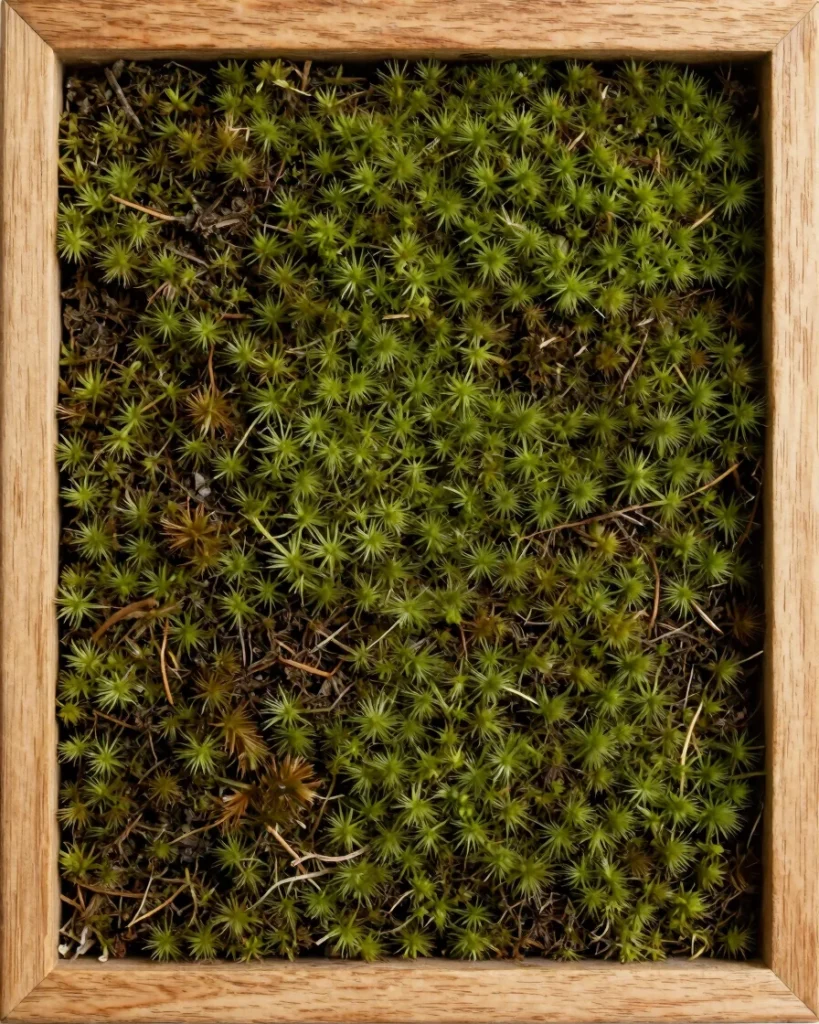
The soft, irregular surface of moss also plays with light in a way that painted walls cannot. It catches shadows and highlights in subtle patterns that shift through the day. That movement, small as it is, keeps the wall from feeling static. For someone who spends a lot of time in a room, that small visual change can make a surprising difference in how the space feels.
Preserved moss art sits at a useful intersection: it is natural enough to soften a room, durable enough to last, and varied enough to suit many styles. Whether you choose a simple green panel or a mixed composition with multiple textures, the result is a wall feature that asks for almost nothing and gives back a quiet, grounding presence.
Corrections
Spot something wrong? Send it to the desk and it gets fixed in the open.